

INVICTUS
B2B LEAD GENERATION AGENCY
INVICTUS Lead Generation
Your B2B Lead Generation Agency for the DACH Market
We are a B2B lead generation agency with over 17 years of experience in the German-speaking market. INVICTUS helps international companies enter and grow in Germany, Austria, and Switzerland — with measurable results through SEO, GEO, performance marketing, social selling, and content. INVICTUS Lead Generation offers you measurable results for B2B lead generation in Germany, Austria, and Switzerland (DACH region). Would you like to introduce new products or services to the German speaking market? Are you looking for a lead generation agency that understands sales-driven marketing and generates qualified leads for your company? Then we are the right partner for you!
INVICTUS has been operating as a B2B lead generation agency in Berlin since 2007, with additional locations in Brandenburg and Vienna. Over 100 clients in the DACH region trust us with acquiring qualified leads.
We combine organic search (SEO), Generative Engine OptimisationGEO), paid Performance Marketing, LinkedIn Social Selling and target-group-appropriate Content Marketing in a cross-media approach — for leads that can be directly handed over to your sales team.
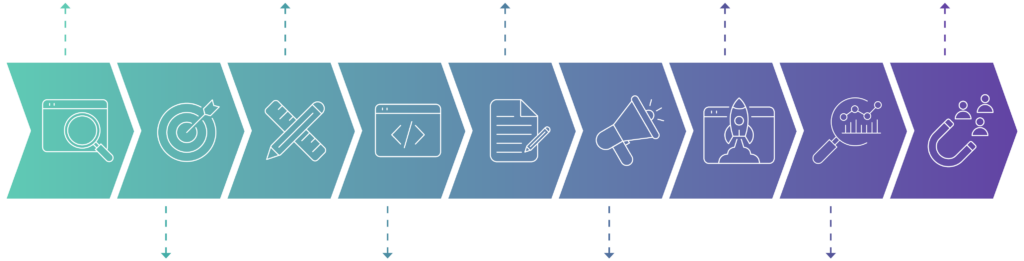
As a trusted B2B lead generation agency, we ensure optimal results by following a cross-media and holistic approach divided into nine interconnected steps:


Analysis
For a successful Market Entry we support you from the very beginning: The process begins with a comprehensive analysis. Our analysis includes market and target group research, legal framework conditions, and an examination of the entire customer journey—the basis for generating targeted leads and reaching potential customers.
Positioning
Based on this analysis, we collaboratively design a tailored Business SrategyWe define your USPs, goals and priorities. Clear positioning creates the conditions for targeted inbound marketing measures and sustainable lead generation – from the landing page to the call to action.
Branding
The next step is Branding: For successful B2B lead generation, your brand must clearly stand out from the competition. Our experts develop a strong B2B brand profile, including corporate identity, design and logo, and showcase your company in a way that appeals to your target audience. This is an important building block for attracting qualified leads with relevant content and a clear brand profile.
Web Design
A visually appealing landing page or subpage for your new product or service is also crucial for generating new leads. We are here to help you with this too: INVICTUS offers your B2B company a comprehensive responsiv Web Designfocused on functionality and usability, featuring thoughtful interaction design, a logical page structure, and precise content templates.
Content
Campaigns
In addition, we plan and create targeted B2B lead campaigns for your product launch. Depending on your strategy, these include automated social media campaigns, Google Ads, social selling on LinkedIn or effective email marketing. We are also your point of contact for integrated marketing and sales automation, generating significant leads through efficient processes.
Launch
Once we’ve developed your online marketing strategy, highlighted your B2B brand with unique branding and web design, and created high-quality content, we utilize all defined channels to support product sales. This ensures a successful launch is within reach!
Optimization
However, the launch is just the beginning—we stay by your side to continuously evaluate and optimize you Campaigns This includes community management and monitoring KPIs to ensure your content consistently delivers the desired results. Continuous performance optimization, whether through search engine optimization (SEO) and search engine advertising ) or adjustments to content formats, is an integral part of our work.
Lead Generation (LeadGen)
Through inbound marketing, strong content and targeted conversion elements, we generate not only data, but genuine qualified leads that are ready for sales and can be transferred directly to your CRM. Regardless of whether your company is based in the DACH region or not.
Our expertise stems from successfully completing projects for over 100 clients across Germany, Austria, and Switzerland.


















Ready for purpose-driven marketing?
Start your project with us!
Thank you very much! We will be in touch shortly.

Stefan Roggatz
Location
Franz-Ehrlich-Straße 12, 12489 Berlin, Germany
–
Headquarters Berlin
Franz-Ehrlich-Str. 12
12489 Berlin | Germany
Branch Office Brandenburg
Küchenmeisterallee 79
15711 Königs Wusterhausen
Germany
Vienna branch
Invictus c/o Talent Garden Vienna
Liechtensteinstraße 111–115
1090 Vienna | Austria
Frequently Asked Questions about B2B Lead Generation in the DACH Region

What does a B2B lead generation agency do?
A B2B lead generation agency supports companies in systematically identifying, approaching, and qualifying potential business customers. This includes analysing the target audience, developing relevant content and campaigns via search engines, social media, and paid channels, as well as handing over sales-ready leads to the sales team. INVICTUS specialises in B2B lead generation in the DACH market — with a deep understanding of the particularities of the German-speaking business environment.
What is the cost of B2B lead generation in Germany?
The costs of B2B lead generation in Germany depend on the channels used, the target audience, and the campaign complexity. Performance marketing budgets (Google Ads, LinkedIn Ads) are typically planned separately. INVICTUS creates individual offers — arrange a Free initial consultation for a transparent cost overview.
How long does it take for B2B lead generation to deliver results?
SEO and content-driven lead generation typically shows its first measurable results within three to six months. Paid campaigns (Google Ads, LinkedIn Ads) can deliver initial leads within a few weeks of launch. LinkedIn Social Selling generally builds a resilient pipeline within two to four months of consistent activity. INVICTUS combines all channels in a phased approach – for short-term lead flow and long-term organic growth.
Was sind die Besonderheiten der B2B Leadgenerierung im DACH-Markt?
The DACH market (Germany, Austria and Switzerland) has its own distinct characteristics that require a localised approach: high GDPR requirements, formal business communication, a dense medium-sized business structure with long decision-making cycles, and distinct regional differences between the three countries. A B2B lead generation agency with in-depth DACH experience is crucial for companies looking to enter or scale in this market.
What distinguishes INVICTUS from other lead generation agencies?
INVICTUS focuses on the German-speaking B2B market, combining SEO, GEO (Generative Engine Optimization for AI Search), performance marketing, social selling, and content in a fully integrated approach. As a Semrush agency partner based in Berlin with over 100 clients served, we measure success in qualified leads, not just impressions or clicks.